Explore by topic

How circular lighting is delivering real-world impact
Last updated: May 26, 2026
Photo from Signify
Summary
Circular lighting is cutting energy use and material waste through smart design, service-based models, and upgrades over replacement, proving that retaining value beats linear "take-make-waste" systems.
The world is under growing pressure to do more with less. Rising energy demand, constrained resources, supply chain volatility, and the urgency of climate action are forcing organisations to rethink the systems they rely on.
Good news is that some sectors already show what large-scale transformation can look like. Lighting is one of the clearest examples. In 2006, it accounted for around one-fifth of global electricity consumption. Today, that share has dropped to roughly 9%, largely due to the transition to LED technology, even as demand for lighting has continued to grow. Because it is both energy-intensive and highly standardised, it has been an early focus for efficiency innovation, and a useful indicator of how far system change can go when technology and design align.
This progress shows what efficiency can achieve. But there’s more that can be done in terms of resource efficiency.. Energy use has come down, yet the materials, components and infrastructure behind lighting systems are still largely treated as linear: produced, installed, and eventually replaced. The next step is therefore not just about using less energy, but about using materials and products more intelligently over time. This is where circular lighting comes in, shifting from one-time efficiency gains to systems that extend product lifetimes, retain value in existing assets, and eliminate waste across the full lifecycle.
Across the lighting sector, this shift is already underway. From circular-ready product design and service-based models to upgrade strategies, approaches such as Signify Circle show how lighting is moving from optimisation at the point of use to continuous value creation over time. The following examples illustrate what this looks like in practice across different contexts, from retail environments and service models to urban infrastructure.
Circular lighting at PLUS supermarket
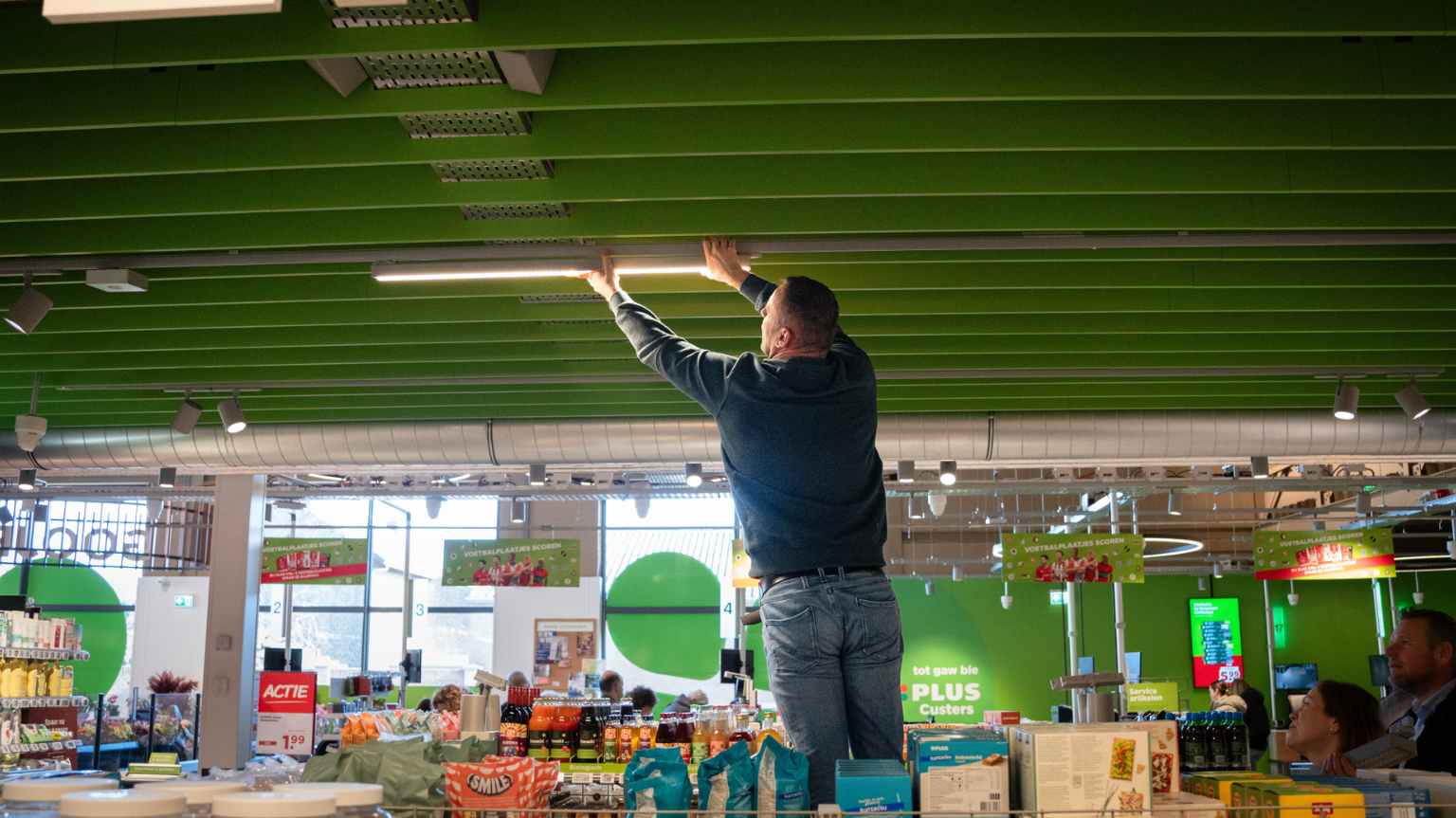
This shift starts at the product level, where design decisions determine what is possible across the entire lifecycle. PLUS is redefining the future of retail by showing that sustainability and high performance can go hand in hand. By embracing a ‘circle ready’ philosophy, the Dutch supermarket chain has integrated a lighting system designed to use less, use longer, and use again.
This vision comes to life through 3D-printed luminaries crafted from recycled materials, including 65% recycled polycarbonate and 85% recycled aluminium heatsinks, a combination that significantly lowers CO2 emissions while preserving resources. Combined with long-life LED technology (50,000+ hours), the intelligent lighting system gives PLUS real-time energy insights needed to optimise operational performance. From the Eijsden store pilot to a nationwide rollout, PLUS demonstrates how circular design choices at the product level can scale into both environmental and commercial value, including a potential 30% reduction in annual electricity costs.
Circular lighting at PLUS supermarket
Light as a service
Once circular design is embedded, the next barrier is often how systems are financed and delivered at scale. This is where service-based models change the equation. Through Light as a Service, businesses shift from upfront investment to a monthly fee that covers everything from design and installation to operation, maintenance and upgrades.
By keeping ownership with the manufacturer or contractor, service-based models create a built-in incentive to make luminaires last. With the right expertise in maintenance, repair, upgrades and refurbishment, products stay in use for longer, reducing premature replacement and supporting a more circular lighting model.
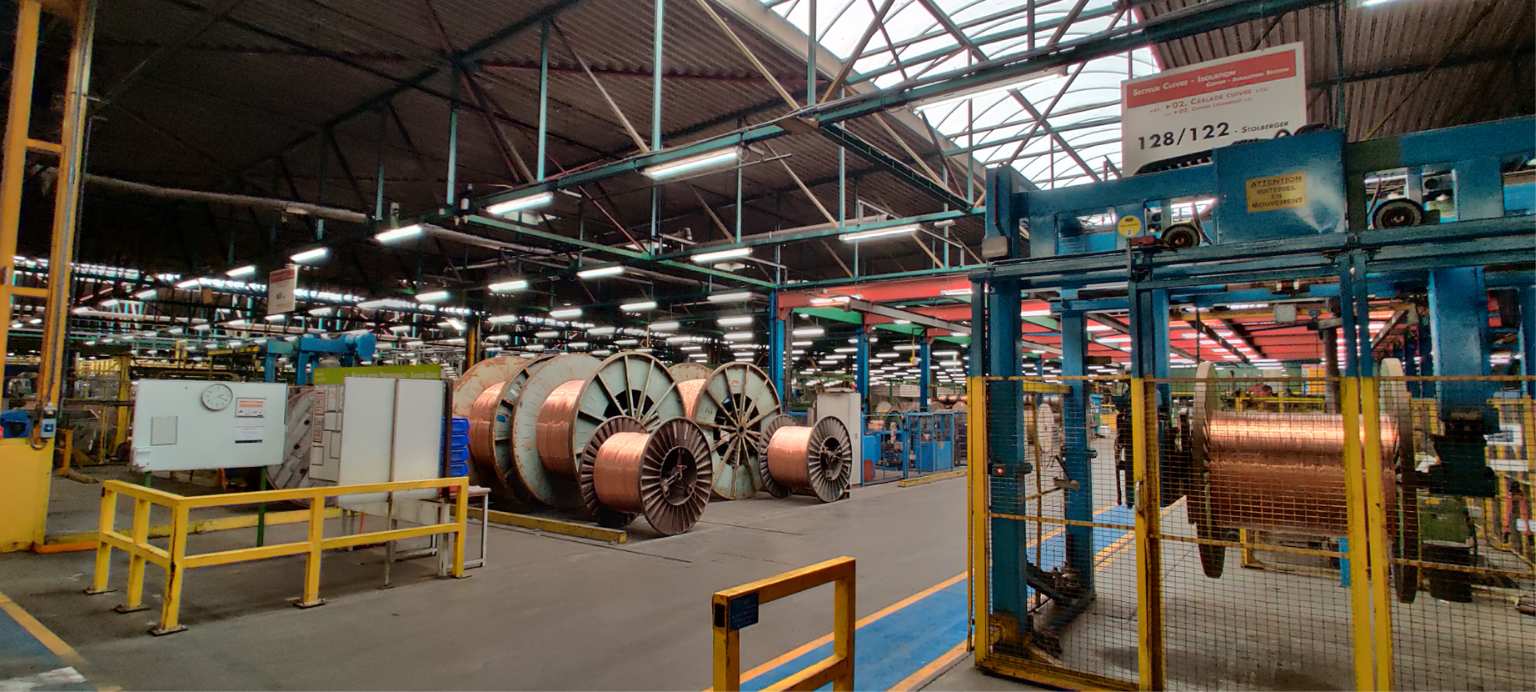
Nexans is one example. In just 24 months, together with Signify, 12 sites across Europe were upgraded with a standardised, future-ready lighting solution, reducing carbon footprint by 1,400 tonnes of CO2 per year. Beyond efficiency, the 10-year partnership with Signify ensures continuity, predictable performance, and the flexibility to evolve over time.
It is a clear example of how shifting from ownership to service can simplify complexity, accelerate impact, and unlock long-term value.
Nexans site in Switzerland
Serviceability and upgrade in Grenchen
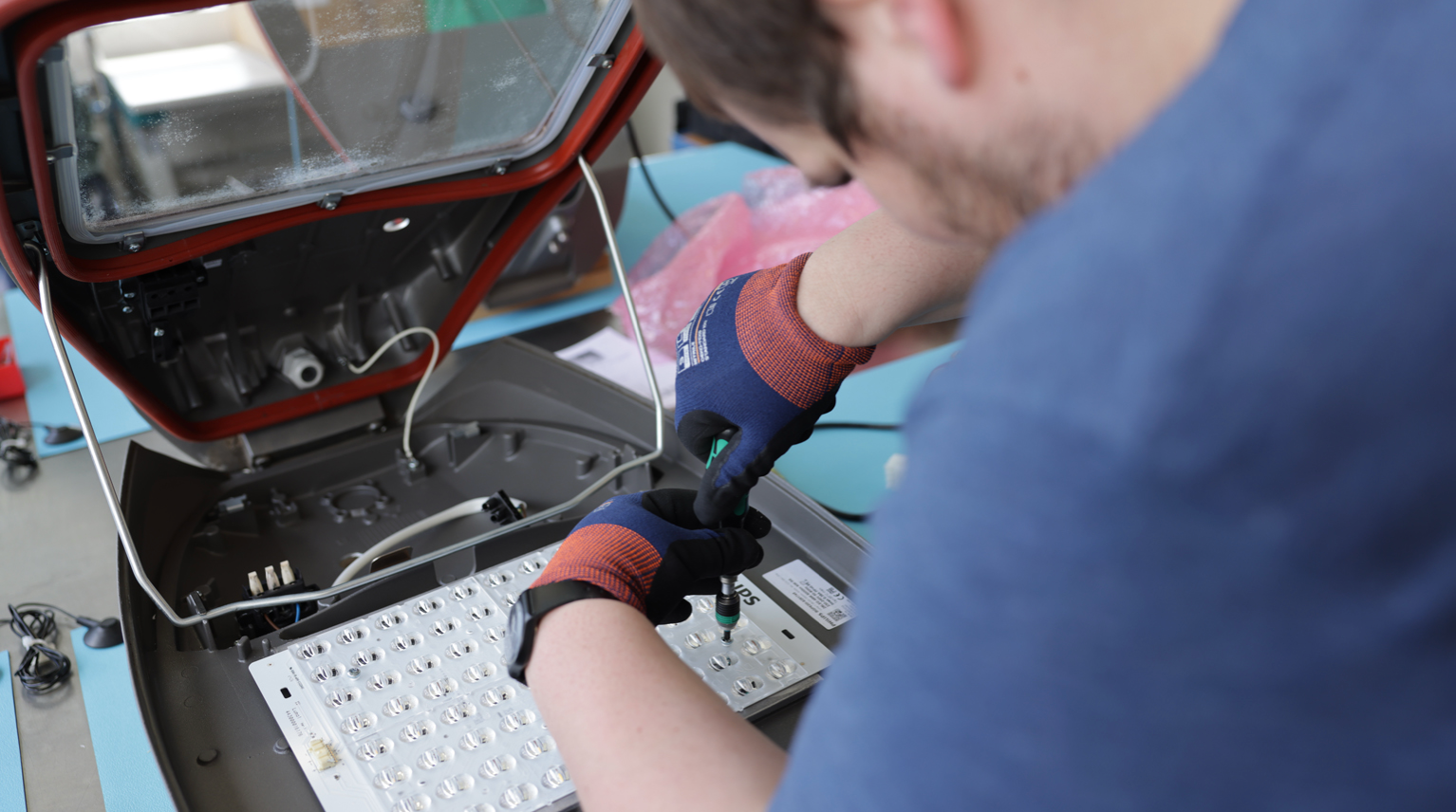
At the infrastructure level, circularity is also being unlocked through targeted upgrades of existing systems. In partnership with Elektron AG and Signify, the city of Grenchen is upgrading existing streetlights rather than replacing them, giving infrastructure a second life through improved electronics and smart connectivity.
By preserving the original aluminium housing, often the most carbon-intensive component, Grenchen retains the value of what is already built while unlocking the benefits of intelligent, connected lighting. The impact is both immediate and longer term: up to 76% CO2 savings, reduced material use, and around 30% less energy consumption, combined with improved operational efficiency through real-time monitoring and control.
Used luminaires are also fully refurbished in collaboration with VEBO Genossenschaft, a local sheltered workshop that provides employment for people with disabilities. This not only extends product life but also creates social value within the community.
Luminaires being upgraded
The path ahead
Across these examples, a clear pattern is emerging: circular lighting is no longer experimental. It is being embedded across products, services, cities and infrastructure, delivering measurable reductions in emissions, material use, and operational costs. But scaling these approaches will require more than isolated innovation. It depends on aligning design, business models, and policy to move beyond linear ‘take-make-waste’ systems and enable circularity by default.
As highlighted in the Circularity Gap Report 2026, circularity is not only an environmental imperative but also an economic one. By keeping materials, components and products in use for longer, circular systems retain more value within the economy, reducing waste while improving long-term economic resilience.
Lighting makes this shift tangible. It shows what is already possible, as well as what is possible for other sectors to move from pilots to mainstream practice. See how you can introduce circular lighting in your projects here.
Citations
- https://www.iea.org/news/lights-labours-lost-policies-for-energy-efficient-lighting?utm_source=chatgpt.com
- https://www.iea.org/commentaries/the-next-wave-of-led-lighting-smarter-circular-and-more-efficient
- https://www.signify.com/global/sustainability/signify-circle
- https://www.signify.com/nl-nl/specifier/plus
- https://kh-assets.prod.circularity-gap.world/content-image/pbeGTqbeLHzO6lJ3.jpg
- https://www.signify.com/global/signify-services/managed-services/light-as-a-service
- https://www.eaas-initiative.org/case-study/accelerating-light-as-a-service-and-circular-economy-with-signify/
- https://www.signify.com/global
- https://www.nexans.com/news/nexans-partners-with-signify-to-foster-our-decarbonation-journey-in-europe/
- https://kh-assets.prod.circularity-gap.world/content-image/ge3JWV-cG8O4skEo.jpg
- https://www.elektron.ch/en/
- https://www.signify.com/global/partner-program/the-power-of-two-awards/city-of-grenchen-by-elektron-ag
- https://www.vebo.ch/
- https://kh-assets.prod.circularity-gap.world/content-image/_oiKaE61ldvu5O6r.png
- https://dashboard.circularity-gap.world/report/2026/cgr-2026-overview
Learn more about this case
Learn moreContributors
Owner
Date added: May 26, 2026
Last updated: May 26, 2026
Involved organisation(s)
Location
Industries
Key elements of the circular economy
Attachments and links
More from Circle Economy

Add your content
Strengthen the circular economy knowledge base by adding a report, case study, publication, or other resource to our platform!