Explore by topic

Closing the gap: How the EU can lead a fair and global circular transition
Last updated: Jul 20, 2026
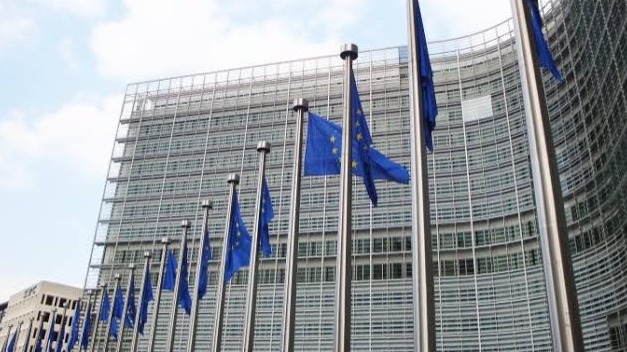
Photo from Unsplash
Summary
The circular economy offers a practical approach to achieving climate stability, resource security, and fair global value chains. But a successful circular transition must work across borders, support workers and communities, and reduce the environmental and socioeconomic pressures created by today’s linear systems.
Circle Economy’s Position Paper in response to the European Commission’s Circular Economy Act
We at Circle Economy, an impact organisation based in the Netherlands, welcome the Circular Economy Act and the global leadership the European Union is taking in driving circular economy policies. As highlighted in our Circularity Gap Report 2025, the circularity gap continues to widen. The use of secondary materials is declining—from 9.1% in 2018 to 6.9% in 2025—while overall material consumption keeps rising.
The circular economy offers a practical approach to achieve climate stability, resource security, and fair global value chains. But a successful circular transition must work across borders, support workers and communities, and reduce the environmental and socioeconomic pressures created by today’s linear systems.
Our response to the public consultation for the upcoming Circular Economy Act builds on our main areas of expertise: understanding circularity from a systemic perspective and providing clear data to measure progress. We examine value chains as part of the global economy, rather than in isolation, and assess both environmental and socio-economic impacts holistically. We recognise the importance of adopting a territorial approach to circularity, acknowledging the crucial role that cities and regions play in planning and embedding the circular economy within our societies and economies. A key part of our work is focused on fixing the economic and financial inadequacies of our linear system, enabling circular business models to compete fairly and scale effectively.
In addition to our response to the public consultation, we highlight below several key messages derived from 15 years of experience researching and implementing circular transitions:
● The Circular Economy Act must address ever-growing material overconsumption and overproduction, which is currently lacking from the scope of the Act. Focusing primarily on recycling will not close the loop: priority must be given to lowering the material footprint of key sectors, including construction, agri-food, consumer goods, and mobility.
● It is welcome that the consultation places such a strong emphasis on economic and financial incentives. Virgin materials are still too cheap, and circular business models struggle to compete. Prices need to reflect real environmental and social costs to direct investment towards durable, repairable, and waste-preventing products and services. This falls within the scope of the Act, which proposes landfill taxes, clear recycling targets, and a revised Extended Producer Responsibility framework.
● The consultation rightly highlights the importance of skills and reskilling. A circular economy cannot work without a well-trained and capable workforce. To ensure a fair transition, targeted training and support must be provided to workers, guided by strategic roadmaps steering sectors towards a circular future. The EU can support Member States with this through roadmaps, facilitating the exchange of best practices and sharing insights from existing educational and training institutions.
● The European Union is an ideal place to build communities of practice and share what works among countries. Beyond businesses and central governments, cities are best placed to serve as testing grounds for circular solutions. With growing urbanisation, their close connection to citizens, and the right scale for action, cities must be recognised as essential partners in the circular economy transition.
● Finally, Europe cannot deliver circularity in isolation. Supply, production and end-of-life management largely take place outside the EU, making fair cooperation essential. Circular policies must avoid shifting environmental or social impacts to trading partners. A truly circular Europe must be built with global trade partners, not at their expense, through political support and collaboration, technology transfer, financial and development assistance, and investment.
The Circular Economy Act has the potential to be a milestone for circular economy implementation in the EU. In a time of political uncertainty, the Act can offer a clear direction towards ambitious policies that make sense for people, the environment and businesses. To succeed, the Circular Economy Act must go beyond recycling to reduce the material footprints of key sectors, supported by economic incentives that reflect true environmental and social costs. A well-trained and supported workforce, active city involvement, and strong global cooperation are essential to ensure an inclusive, effective, and truly circular transition across the European Union.
Contributors
Owner
Date added: Jul 20, 2026
Last updated: Jul 20, 2026
More from Circle Economy

Add your content
Strengthen the circular economy knowledge base by adding a report, case study, publication, or other resource to our platform!