Explore by topic

Bio-based green roof on Chicago's municipal buildings
Last updated: Sep 7, 2023
Summary
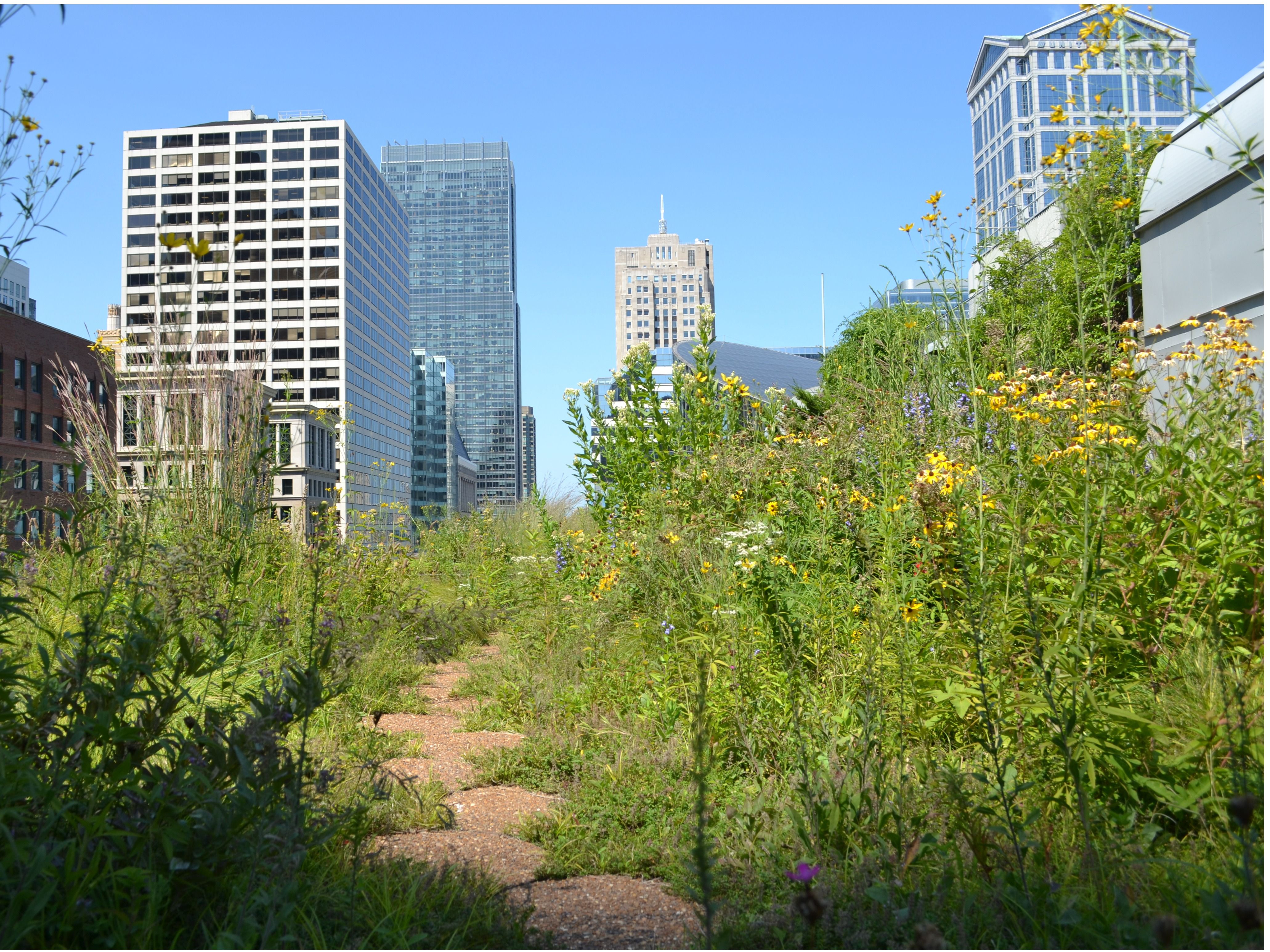
The Chicago City Council has taken great initiative when it comes to green roofs. Atop the City Hall there is a garden consisting of more than 20,000 plants including shrubs, trees and grasses. The garden provides an important habitat for insects, reduces storm water runoff, improves air quality, conserves energy and lessens the urban heat island effect.
Problem
In order to combat the urban heat island effect and to improve urban air quality, the City of Chicago began construction of a rooftop garden in April 2000.
Solution
The garden consists of 20,000 plants of more than 150 species, including shrubs, vines and two trees. The plants were selected for their ability to thrive in the conditions on the roof, which is exposed to the sun and can be windy and arid. Most are prairie plants native to the Chicago region. A supplemental irrigation system will aid in establishing the plants as well as provide supplemental water during extreme periods of drought.
Outcome
The City Hall rooftop garden is a circular initiative, because it improves air quality, conserves energy, reduces stormwater runoff and helps lessen the urban heat island effect. Plants have the ability to cool the air, because of evapotranspiration, which occurs when plants secrete water through pores in their leaves. The water then draws heat as it evaporates. Plants can also filter the air by using excess carbon dioxide to produce oxygen.
Chicago City Hall’s greenroof saves $5,000 a year on utility bills and can retain 75% of a 1 inch rainfall before there is stormwater runoff into the sewers.
Learn more about this case
Learn moreLocation
Industries
Key elements of the circular economy
Attachments and links
Contributors
Owner
Contributor
Contributor
Date added: Oct 1, 2020
Last updated: Sep 7, 2023
More from the contributors







Add your content
Strengthen the circular economy knowledge base by adding a report, case study, publication, or other resource to our platform!