Explore by topic

MycoTile - Construction materials from fungi
Last updated: Aug 17, 2022
Summary
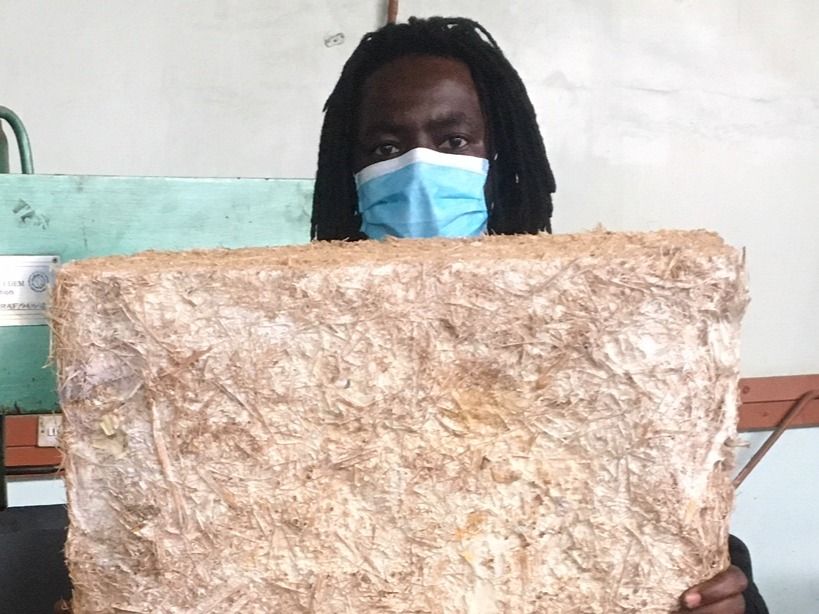
MycoTile produces locally manufactured, alternative building materials using agricultural waste and fungal mycelium. MycoTile’s building materials offer a high-performance and cheaper alternative to traditional construction materials. MycoTile uses a carbon negative process to bond agricultural waste (such as maize cobs, coffee husks, coconut coir and rice husks) with mushroom mycelium. The product is then denatured through heat treatment to inhibit mycelium growth.
Problem
Imagine a tough, fire-resistant building material that could simply grow from a combination of mushrooms on agricultural waste. In Kenya, most construction materials are imported, and for this reason are relatively expensive and often simply not the best quality. The country has an annual housing demand of 250,000 units with an estimated supply of just 50,000, leaving an 80% deficit. At the same time, there are natural resources whose potential application in construction is largely untapped. One is agricultural waste produced by small-scale farmers. Another is mycelium, a natural fungal material with industrial-level strength.
Solution
MycoTile offers a high performance and cheaper alternative to traditional building materials. They use a carbon negative process to bond agricultural waste (such as maize cobs, coffee husks, coconut coir and rice husks) with mushroom mycelium. The product is denatured through heat treatment in order to inhibit mycelium growth. Their first product was suspended ceiling panels, which have superior acoustic performance and fire-retardant properties compared to the available alternatives. The fire-retardancy is naturally enhanced by the chitin present in mycelium.
MycoTile have big plans and are prototyping a larger portfolio of products, such as wall insulation, construction blocks, MDF-style panels and even furniture. Although the major challenge has been changing public perception on the use of mycelium in construction, MycoTile currently has more demand than they can supply. A recent important step in their growth was the conclusion of a co-manufacturing contract with a government entity. They are establishing partnerships with small scale farmers, who they pay for agricultural waste, to assure security of supply.
Location
Industries
Involved organisation(s)
Key elements of the circular economy
Attachments and links
Contributors
Owner
Contributor
Date added: Feb 10, 2021
Last updated: Aug 17, 2022
More from the contributors

Add your content
Strengthen the circular economy knowledge base by adding a report, case study, publication, or other resource to our platform!