Explore by topic

MARE: Using textile waste from the agro-industrial sector as an input for the fashion industry
Last updated: Dec 28, 2023
Summary
In Uruguay, the agro-industrial sector is a great source of plastic textile waste, which generates an ecological impact due to contamination by microplastics and greenhouse gas (GHG), product of its incineration.
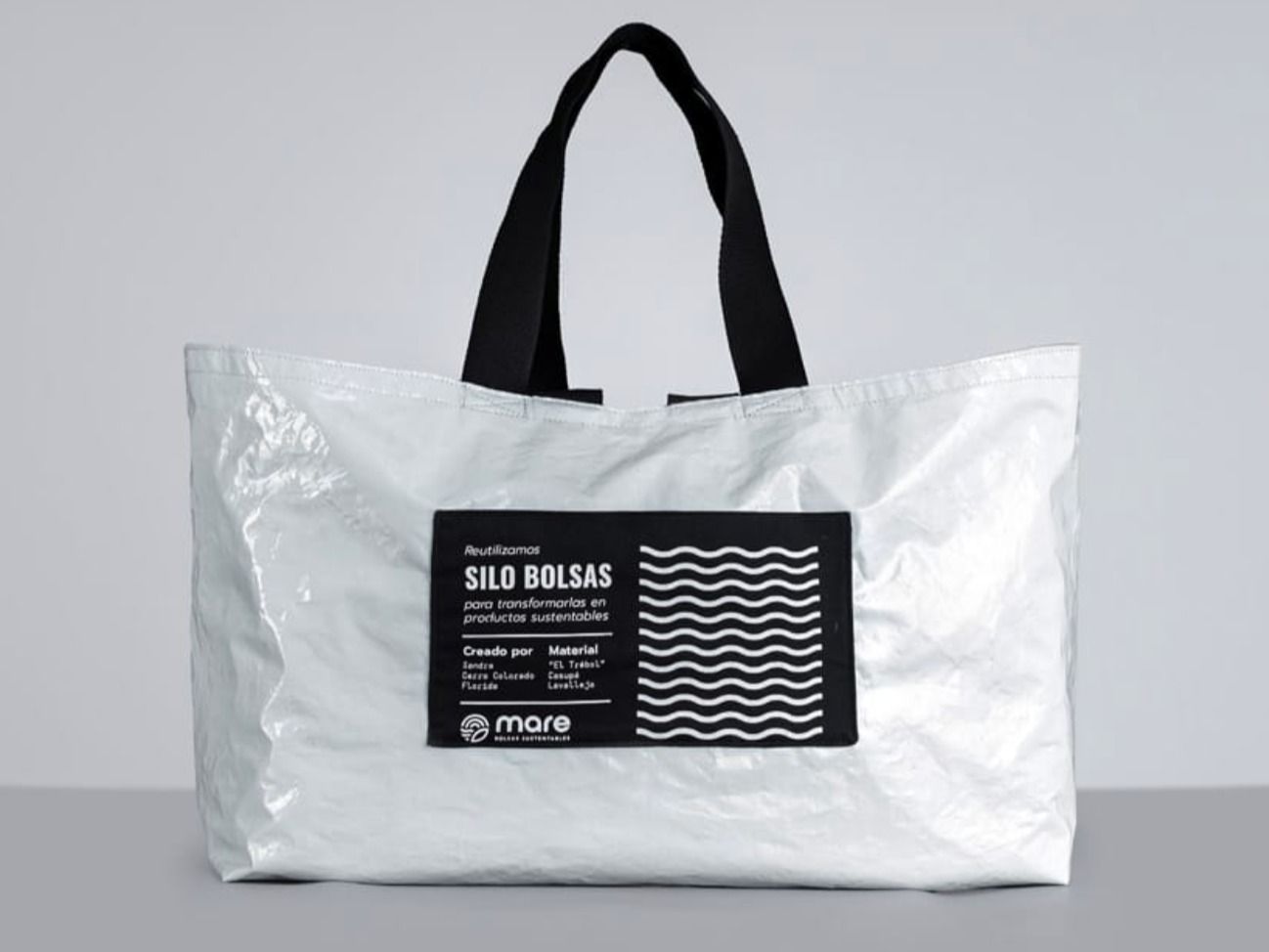
MARE is bag and accessories company that reuses silo bags and industrial big bags to create different types of containers for personal use.
In 9 months of activity, the company has reused more than 1 ton of textile plastics, minimizing waste and use of new materials in the fashion sector.
Problem
In Uruguay, more than 3,000 tons of silo bags are discarded per year and 800,000 kg of big bags, which are made of synthetic textile monofilaments.
The silo bags are used to store dry corn, soybean, wheat, sunflower and rice grains in optimal conditions and the big bags are used as packaging for fertilizers and other rural input products.
After their use, rural establishments dispose of these textiles and in many cases the management is not adequate. Open burning is common, which disperses dioxins and furans, and also uncontrolled burial is frequent, which generates the release and dispersion of microplastics, contaminating water resources and soil.
Solution
The Uruguayan company MARE, founded by fashion designer Andrea Ramagli, reuses industrial silo bags and big bags to create different types of tote bags and containers for personal use.
The material is conditioned and used like any textile, taking advantage of its qualities, such as resistance and impermeability, to achieve strong and long-lasting products.
Outcome
In 9 months of activity, the company has reused more than 1 ton of textile plastics and they estimate to double that amount in the coming months. The reuse of rural textile waste contributes to the minimization of waste and avoids the use of new materials in the fashion sector.
In addition to this, MARE also works with decentralized sewing workshops in different rural areas of Uruguay, and with the sewing workshops of the Ministry of Social Development, which generates a social impact, supporting women in vulnerable situations.
Location
Industries
Involved organisation(s)
Key elements of the circular economy
Attachments and links
Contributors
Owner
Contributor
Contributor
Date added: Sep 1, 2022
Last updated: Dec 28, 2023
More from the contributors





Add your content
Strengthen the circular economy knowledge base by adding a report, case study, publication, or other resource to our platform!